
CCL Injuries in Dogs: What to Expect From Diagnosis Through Recovery
Watching a dog start limping on a back leg, especially after a run at the beach or a game of fetch at the park, is the kind of moment that tends to send Los Angeles dog owners straight to their phones. CCL tears are among the most common orthopedic injuries in dogs, and for most patients the path forward involves surgery. The debate between TPLO, TTA, and extracapsular repair comes down to the individual dog: size, age, activity level, and the degree of joint instability all factor into which approach will deliver the best long-term outcome. Getting that recommendation right requires a thorough evaluation, not just an assumption based on breed alone.
Santa Monica Veterinary Group is a family-owned practice offering a full range of veterinary services including orthopedic surgery, advanced diagnostics, and rehabilitation support for dogs recovering from cruciate injuries. Our team is available to evaluate your limping dog, manage their pain, and create a path forward. Contact us to schedule an evaluation and get a clear picture of what recovery can look like for a specific dog.
What Is a Canine CCL Injury?
The cranial cruciate ligament (CCL) is the primary stabilizing structure inside the canine knee joint. It connects the femur (thigh bone) to the tibia (shin bone) and prevents the tibia from sliding forward during weight-bearing. When it tears, either partially or completely, the joint becomes unstable, painful, and progressively arthritic without intervention.
Causes, Risk Factors, and Why the Knee Fails
Canine cruciate ligament injury differs from the classic “sports injury” framing people often apply to it. In dogs, this is usually a degenerative condition: the ligament weakens over time due to genetic, anatomical, and lifestyle factors, and ruptures at some point, often during normal activity rather than a single traumatic event. The dog that blows a knee during a game of fetch in Palisades Park was often already walking on a compromised ligament before that moment.
Common contributing factors include:
- Breed predisposition: Labrador Retrievers, Golden Retrievers, Rottweilers, Boxers, and Staffordshire Bull Terriers are among the highest-risk groups
- Body weight: excess weight increases mechanical stress on the joint significantly
- Activity patterns: “weekend warrior” dogs who are sedentary most of the week and highly active on weekends are at elevated risk
- Tibial plateau angle: steeper anatomy in certain breeds increases the shear force placed on the CCL during normal walking
- Age and prior injury: middle-aged dogs are most commonly affected, and tearing one CCL increases the odds of the opposite side tearing within 1 to 2 years
Nutrition counseling to achieve and maintain a healthy weight is one of the most effective tools for reducing injury risk and protecting joint health long-term. Our team can incorporate weight targets into a comprehensive wellness plan during your dog’s regular visits.
What Does a CCL Injury Look Like in a Dog?
The signs do not always announce themselves dramatically. Some dogs go from normal to non-weight-bearing overnight, but many owners notice a more gradual pattern that is easy to attribute to something minor. Watching for specific changes in movement and behavior is important because early recognition leads to better outcomes.
Recognizing the Signs Early
Signs that deserve evaluation include:
- Hind-limb limping that appears during or after exercise, or that comes and goes throughout the day
- Difficulty rising from rest or reluctance to jump into the car or onto furniture they normally use without hesitation
- Visible swelling on the inside of the knee, sometimes described as a “bony bump” that develops as joint fluid accumulates
- A toe-touching gait, where the foot briefly contacts the ground but little weight is placed on it
- Stiffness after long rest periods that improves briefly with movement before worsening again
- Behavioral changes: less willingness to run, play, or engage in activities they previously enjoyed
Symptoms observed over several days, not just a single moment, give the most accurate picture. Keep notes on when limping appears, which activities trigger it, and how quickly a dog recovers after rest. This tracking helps our team understand the progression and make the best recommendation for your dog.
How Is a CCL Tear Diagnosed?
Diagnosis requires a hands-on orthopedic examination combined with imaging. Your veterinarian will assess joint stability and review imaging findings to determine whether surgery is needed and which approach is best.
Orthopedic Examination and Imaging
Diagnosing a CCL tear requires a thorough hands-on orthopedic examination. Two tests are used to assess joint stability: the cranial drawer test, which checks for forward movement of the tibia relative to the femur, and the tibial thrust test, which replicates the forces placed on the joint during walking. Both require a cooperative and appropriately relaxed patient, and sedation is sometimes needed to get a reliable assessment.
X-ray diagnostic imaging is standard, not to visualize the ligament itself (ligaments do not appear on standard radiographs), but to evaluate the degree of joint effusion (fluid accumulation), signs of secondary arthritis, tibial plateau angle, and bone alignment relevant to surgical planning. Santa Monica Veterinary Group has in-house digital radiographs available for timely evaluation, so you can move forward with a clear understanding of your dog’s specific condition.
For complex cases, particularly those involving suspected meniscal injury or incomplete tears that are difficult to characterize on physical exam, advanced soft tissue imaging such as MRI occasionally adds meaningful detail to the diagnostic picture. Our team can refer for MRI when it changes the surgical plan and leads to a better outcome.
Which Surgical Approach Is Right for Your Dog?
The goal of CCL surgery is to restore joint stability, relieve pain, and slow the progression of arthritis. Two procedures are most commonly used, and choosing between them depends on the individual dog, not a one-size-fits-all protocol.
Surgical Options for CCL Tears: TPLO, TTA, and Extracapsular Repair
Three procedures are most commonly used to treat CCL tears in dogs, and the right choice depends on the individual patient. Our team evaluates each dog thoroughly and walks you through the reasoning behind any recommendation before anything is scheduled.
TPLO surgery (Tibial Plateau Leveling Osteotomy) works by changing the geometry of the knee itself. The tibial plateau is cut and rotated to a more horizontal angle, which eliminates the forward shear force the torn CCL used to resist. Rather than replacing the ligament, the joint becomes mechanically stable through modified biomechanics. TPLO is generally favored for medium, large, and giant breed dogs, as well as highly active dogs of any size. Long-term outcomes are well-established, and arthritis progression after TPLO tends to be slower than with other approaches.
TTA (Tibial Tuberosity Advancement) is another bone-based procedure that addresses the same mechanical problem from a different angle. Rather than leveling the tibial plateau, TTA advances the tibial tuberosity (a bony prominence at the top of the shin bone) forward, which repositions the patellar tendon so it neutralizes the shear force during weight-bearing. TTA is used in similar candidates to TPLO and offers comparable outcomes in appropriate patients. The choice between TPLO and TTA is often influenced by the specific anatomy of the individual dog and surgeon preference based on case characteristics.
The lateral suture technique (extracapsular repair) takes a different approach entirely, placing a strong synthetic suture outside the joint to mimic the stabilizing role of the torn ligament. It involves less surgical alteration of the bone and is a reasonable option for smaller dogs, less active dogs, or older patients with limited activity demands. In larger or more athletic dogs, the suture material is more likely to stretch or fail over time, which is why bone-based procedures are generally preferred for those patients.
Whichever approach is appropriate for your dog, the goal is the same: a stable, comfortable joint that supports long-term mobility and slows the progression of arthritis.
The Recovery Timeline: What to Expect Week by Week
Recovery from CCL surgery is long, structured, and requires genuine commitment from the entire family. Most dogs are walking on the operated leg within days of surgery, but that early progress does not mean the joint is healed. Full recovery takes four to six months, with activity restrictions that must be followed to protect the repair and allow bone or soft tissue healing to progress appropriately.
Weeks 1 to 2: Strict rest, leash walks only for bathroom purposes, suture care, and pain management. Most dogs are toe-touching by the end of this period.
Weeks 3 to 6: Controlled short leash walks begin, typically 5 to 10 minutes two to three times daily. No running, jumping, stairs, or off-leash activity.
Weeks 7 to 12: Progressive increase in leash walk duration as tolerated. Range of motion exercises and controlled strengthening work typically begin during this phase.
Weeks 12 to 16 and beyond: Gradual return to normal activity, with off-leash exercise introduced only after our team confirms appropriate healing at a recheck visit.
Rehabilitation: Building Back Strength and Mobility
Structured rehabilitation significantly improves outcomes after CCL surgery, both in terms of the speed of recovery and the final functional result. Post-operative rehabilitation for CCL patients typically includes controlled leash walking, range of motion exercises, muscle strengthening, and progressive weight-bearing work. Santa Monica Veterinary Group offers rehabilitation support as part of our comprehensive care model and can develop a protocol tailored to each dog’s needs, balancing professional sessions with home exercise guidance.
Rehabilitation therapies used in veterinary medicine include hydrotherapy (underwater treadmill work), cold laser therapy to reduce inflammation and support tissue healing, therapeutic exercises, massage, and electrical stimulation for muscle activation. Our team can recommend which options will accelerate healing and restore your dog’s strength most effectively.
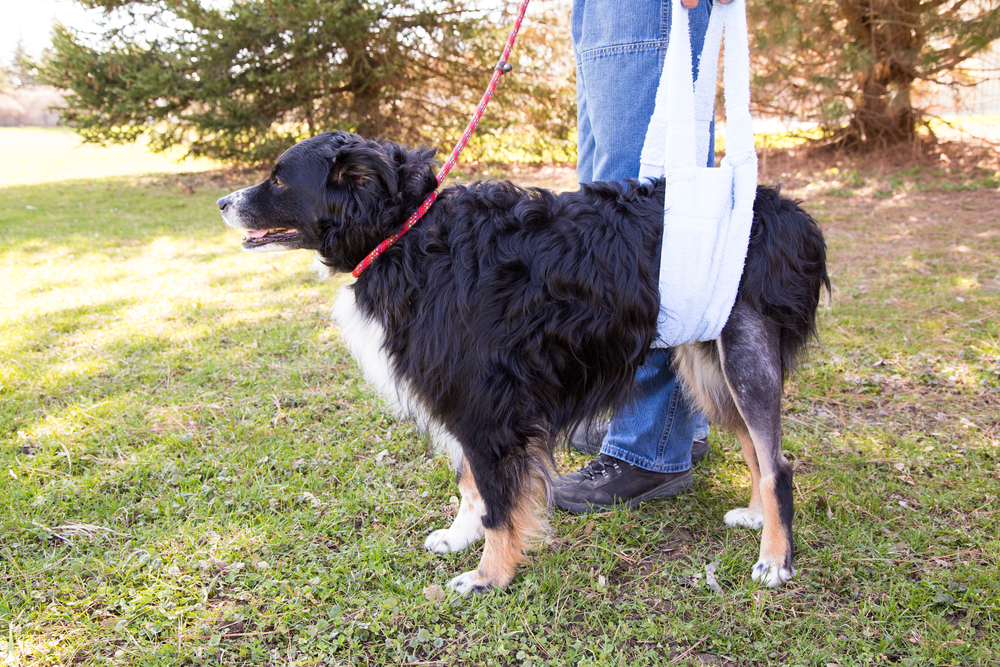
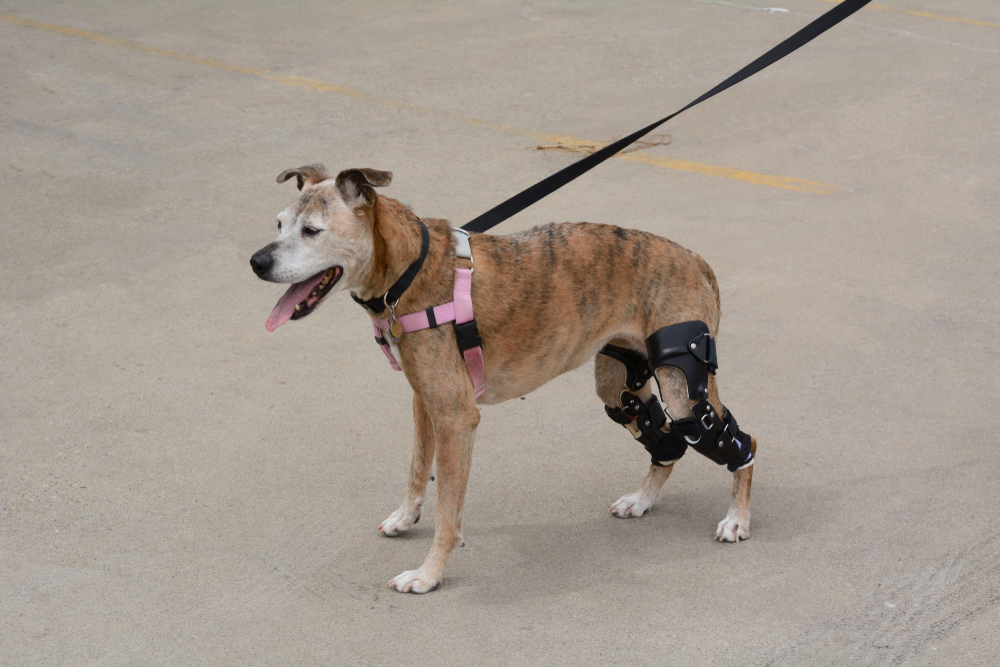
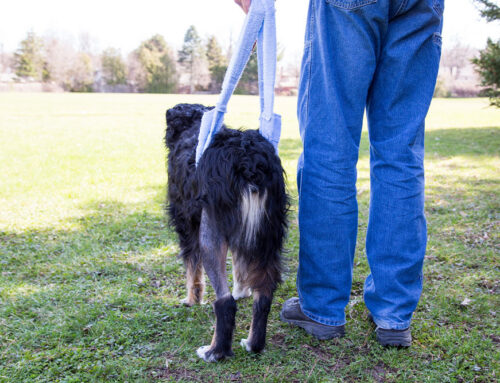
For additional joint support during recovery and beyond, several options are available through our in-house pharmacy. Hip and joint supplements provide nutritional support for cartilage and joint function. Specialized devices like the Knee Protector Brace for Dogs and a Rehab Lifting Harness for Hind Legs offer hands-on assistance during the early recovery period when dogs need extra support rising and walking. Our team can recommend which tools will help your specific dog recover most smoothly.
Crate Rest: Why It Matters and How to Survive It
Crate rest is probably the least-liked part of CCL recovery for both dogs and the people who love them. An active dog confined to a small space for weeks is not a happy dog, and the temptation to allow “just a little” extra movement is real and understandable. But unsupervised movement during healing carries genuine risk: early weight-bearing failures, implant stress, and setbacks that extend recovery significantly.
Surviving crate rest with your dog requires a combination of environmental management and mental enrichment. Practical strategies include:
- Use a crate large enough for the dog to stand, turn, and lie down comfortably, but not so large that jumping is possible
- Provide puzzle feeders, chew toys, and food-dispensing toys to occupy attention
- Short, calm interaction several times daily fulfills social needs without encouraging activity
- Keep the dog in a room with low stimulation (away from windows where squirrels or dogs pass by) during unsupervised periods
- Baby gates to block stairs, and non-slip mats on hard floors throughout the accessible area
Our team can give guidance on specific enrichment strategies and safe handling techniques during the recovery period, helping your family navigate this challenging phase successfully.
Keeping the Other Knee Healthy
One conversation that often happens after a CCL surgery is about the other leg. Statistically, dogs who tear one CCL have a 30 to 50 percent chance of tearing the other within one to two years, often because they compensate heavily on the unaffected limb during recovery. Weight management, gradual controlled strengthening, and avoiding high-impact activity before the operated leg has fully rebuilt muscle mass all contribute to protecting the other knee.
Warm-ups and cooldowns for dogs reduce the risk of acute injury by preparing the musculoskeletal system for activity rather than going from full rest to maximum effort. This habit is worth building into the routine permanently, not just during recovery.
Supporting joint health throughout a dog’s life involves practical environmental modifications and activity recommendations appropriate for different ages and conditions. These strategies protect both knees and support long-term mobility.
Frequently Asked Questions About CCL Tears
What is the difference between a partial and complete CCL tear?
A partial tear means some fibers of the ligament remain intact. The joint is unstable but may not be fully non-weight-bearing. Partial tears often progress to complete rupture over time and frequently require surgery to prevent ongoing joint damage and the rapid progression of arthritis.
Is surgery always required for a CCL tear?
Surgery is strongly recommended for most dogs. Conservative management (rest and physical therapy without surgery) has poor long-term outcomes in medium and large breed dogs, with most developing significant arthritis and ongoing lameness. Small dogs occasionally do well without surgery, but this is a case-by-case determination made during a thorough orthopedic evaluation.
How do I know if my dog tore the other CCL?
Watch for the same signs that indicated the first tear: new hind-limb lameness, stiffness, difficulty rising, or swelling around the opposite knee. Many owners notice it within one to two years of the first surgery. Any new limping or gait change should be evaluated right away.
When can my dog run and play off-leash again?
Off-leash activity is typically not permitted until at least the 12 to 16 week mark and only after our team confirms appropriate healing at a scheduled recheck. Individual variation in healing means this timeline is guided by examination findings, not just calendar time. Returning too early can compromise the repair.
Does Santa Monica Veterinary Group perform CCL surgery?
Yes. Our team provides orthopedic evaluation, pre-surgical diagnostics, anesthesia monitoring, pain management, and post-operative rehabilitation support for dogs with CCL tears. We’ll assess your dog’s specific situation and help you understand which surgical approach gives them the best outcome. Request an appointment to get started with an orthopedic evaluation.
Getting Back to an Active Life
A CCL tear is a serious injury, but it is one of the most successfully treated orthopedic conditions in veterinary medicine. The outcome depends heavily on the quality of the initial evaluation, surgical technique, and how committed the owner is to the recovery protocol. Done well, most dogs return to full activity within four to six months and maintain good joint health for years afterward.
Santa Monica Veterinary Group brings the same “better way to care” standard to orthopedic cases that we apply to every patient, with thorough diagnostics, experienced surgical care, and the kind of follow-through that makes the difference between a good result and a great one. Our family-owned practice understands how much your dog means to you, and we treat them like our own. Contact us when a dog is limping, and get the evaluation that starts the right recovery.

Leave A Comment