


What Lies Beneath: The Importance of Dental Imaging for Pets
You brush their teeth, you provide dental treats, and everything looks perfectly normal when they smile- yet sometimes, your pet is still reluctant to chew their favorite toy or suddenly avoids hard kibble. It’s frustrating when you’re doing everything right but suspect something is wrong with their mouth. What if the real problem isn’t visible on the surface? Dental X-rays offer veterinarians a critical view below the gumline to detect hidden root infections, bone loss, or oral growths early, often before they cause pain or tooth loss. This unseen layer of care is crucial to maintaining lifelong dental health.
At Santa Monica Veterinary Group, we take a comprehensive approach to oral health that includes full-mouth dental imaging as part of every professional cleaning. Using advanced diagnostics and expert anesthetic monitoring, we uncover what can’t be seen by eye- ensuring your pet’s comfort, safety, and long-term wellness. Whether your pet is due for a cleaning or showing signs of oral pain, our team is here to help.
Why Dental X-Rays Are Essential for Pet Health
Dental disease doesn’t just affect what you can see. Beneath healthy-looking gums, inflammation, infection, and bone loss can quietly progress. Without imaging, even a thorough cleaning might miss painful or dangerous conditions.
Unfortunately, many pets receive only surface cleanings, or worse, anesthesia-free dentals that create a false sense of security by polishing teeth without addressing disease below the gumline. True preventive care requires anesthesia for accurate, comfortable imaging that reaches every root and supporting structure.
At Santa Monica Veterinary Group, we use digital dental radiography to evaluate oral health with precision. If you suspect an issue or your pet is due for their next exam, request an appointment today for a full evaluation.
What Dental X-Rays Reveal Beneath the Gumline
Dental X-rays let veterinarians assess far more than the visible surface. Each image captures the complete anatomy of the tooth- including the root, bone, and connective tissue. Radiographs show:
- Early bone loss and infection
- Abscesses and cysts
- Retained roots or unerupted teeth
- Jawbone density and structure
- Hidden fractures or tumors
Many pet owners are surprised to learn that their dog’s canine tooth root is nearly as long as the crown they see- or that a cat’s molar roots sit just millimeters from the eye socket. Without imaging, these deeper issues remain invisible, which can lead to chronic pain or tooth loss if untreated.
Common Dental Problems Identified With X-Rays
Periodontal Disease
The most common cause of dental problems in pets is periodontal disease. It begins when bacteria invade beneath the gums, eroding bone and tissue that support teeth. Even before visible symptoms appear, X-rays detect early damage and help guide treatment to stop progression. Severe cases can weaken the jawbone itself, increasing the risk of painful mandibular fractures.
Our diagnostic equipment allows us to detect subtle changes early- long before teeth become loose or infection spreads.
Fractured Teeth
Small chips and cracks can hide serious damage beneath the surface. Through imaging, we can determine whether fractured teeth have exposed the pulp or damaged the root, guiding decisions on whether to extract or repair the tooth. Fractures often lead to abscess formation when bacteria travel from the mouth through the broken tooth.
Retained Baby Teeth, Malocclusions, and Bite Alignment
Toy breed dental issues are common, causing crowding of teeth that accelerate disease progression. Small breeds also often have deciduous teeth, or baby teeth, that fail to fall out, which can cause improper alignment or abnormal wear. Dental imaging also reveals developmental abnormalities such as unerupted teeth or malformed roots- issues that can go unnoticed without X-rays.
Underbites and overbites are common abnormalities that occur from puppy or kittenhood. When teeth are misaligned, they can press into soft tissues, leading to chronic pain or infection. X-rays clarify the severity of malocclusions and reveal whether extraction or orthodontic correction is needed to restore comfort and function.
Tooth Resorption in Cats
Tooth resorption affects over half of cats at some point in their lives and is one of the most painful feline dental conditions. It begins below the gumline, where the body starts breaking down the tooth root, often leaving the crown appearing normal during a visual exam. As the disease progresses, the tooth structure becomes unstable and increasingly sensitive, making eating uncomfortable or painful. Full-mouth dental imaging is the only reliable way to identify affected teeth, determine the severity of the damage, and guide extraction to permanently relieve pain.
Oral Tumors and Bone Involvement
Dental X-rays are critical when evaluating oral tumors, particularly because these masses often extend beyond what is visible on the surface. Imaging allows veterinarians to assess whether a tumor has invaded surrounding bone or involved nearby tooth roots, information that is essential for accurate staging and treatment planning. In some cases, X-rays reveal bone destruction before significant external swelling or pain occurs.
Tooth Root Abscesses
Severe dental infections can develop even when a tooth looks relatively normal on the surface. Tooth root abscesses form when bacteria enter through a fractured, worn, or traumatized tooth and travel down to the root tip, where infection becomes trapped deep within the jawbone. These infections are extremely painful and often lead to facial swelling, reluctance to eat, drooling, bad breath, or repeated pawing at the mouth or face. In some cases, the abscess may even drain through the skin below the eye or along the jaw.
Because the infection occurs below the gumline and within the bone, tooth root abscesses are rarely visible during a routine oral exam.
Dentigerous Cysts in Dogs and Cats
Some of the most destructive dental problems develop quietly, without obvious symptoms. Dentigerous cysts are fluid-filled sacs that form around the crown of an unerupted tooth. Dentigerous cysts often present as nothing more than a missing tooth, giving the impression that the area is healthy. However, the cyst remains hidden beneath the gumline and can slowly expand over months or even years. As it grows, it can cause displacement or resorption of neighboring teeth, significant bone loss, and in severe cases, pathologic jaw fractures. Dental radiographs are the only way to identify these cysts early.
How Dental X-Rays Guide Treatment Decisions
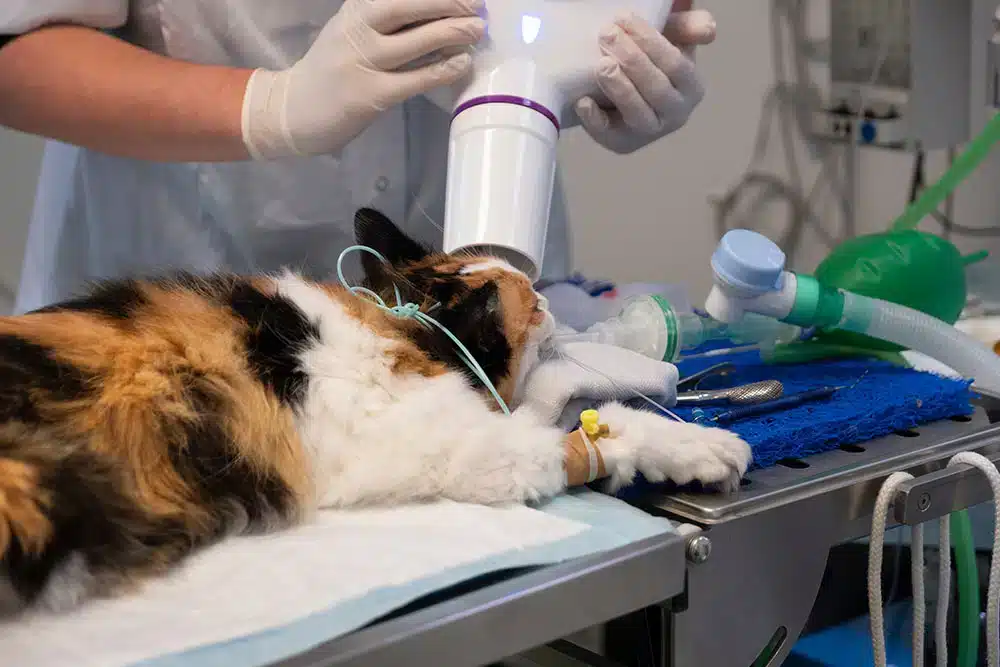
Dental radiographs do more than diagnose- they guide personalized treatment. We interpret X-rays to decide whether a tooth needs extraction, repair, or monitoring. Imaging also confirms healing after surgery, identifies hidden infection, and supports preventive screenings before symptoms appear.
When you bring your pet for dental care, our veterinarians will review the findings with you, show images from your pet’s mouth, and create a treatment plan that fits their specific needs. Ready to take the next step? Request an appointment for a comprehensive dental consultation.
Frequently Asked Questions About Pet Dental X-Rays
Are dental X-rays safe for my pet?
Yes. Digital radiographs use very low levels of radiation and are performed under anesthesia for precision and comfort.
Why does my pet need anesthesia for X-rays?
Anesthesia keeps pets still and pain-free during imaging, allowing us to capture complete, accurate images without stress or risk of injury.
How often should my pet have dental X-rays?
Most pets benefit from full-mouth imaging during each professional cleaning, or more often if they have a history of dental disease or injury.
What happens if a problem is found?
Our veterinarians will explain the findings, discuss treatment options, and guide you through care and recovery every step of the way.
Have more questions? Reach out to our team– we’re always happy to help.
Seeing the Full Oral Health Picture
Healthy teeth are vital to your pet’s overall well-being. Because most dental disease hides below the surface, full-mouth X-rays are the only way to truly evaluate oral health and prevent painful surprises later.
At Santa Monica Veterinary Group, we believe in a better way to care– combining compassionate expertise with advanced imaging and personalized attention. If your pet is due for a cleaning or you’ve noticed signs of discomfort, contact us today. Together, we’ll keep every smile bright, healthy, and pain-free.





Leave A Comment